Red Light Therapy 101: The 'Sunshine in a Box' Your Body Needs This Winter
This page features affiliate links
Click picture to purchase off of Amazon
Let's be honest: Canadian winters can feel a bit rough on the body. By February, you're already tired of scraping ice off your windshield, bundling up in three layers, and watching the sun set at 4:30 PM. Your joints feel a bit creakier, your energy tanks by mid-afternoon, and that winter fog in your brain just won't lift.
Your body is craving something it's not getting enough of: sunlight.
But what if you could give your cells the benefits of sunshine without stepping into the freezing cold? That's exactly what red light therapy does: and it's becoming a game-changer for people dealing with inflammation, sluggish recovery, and those brutal winter blues.
What Exactly Is Red Light Therapy?
Think of red light therapy as sunshine in a box. It's a safe, FDA-approved treatment that uses specific wavelengths of red and near-infrared light to penetrate deep into your skin and tissues. Unlike the UV rays from the sun (which can damage your skin), red light therapy delivers only the therapeutic wavelengths your body needs: without any of the harmful effects.
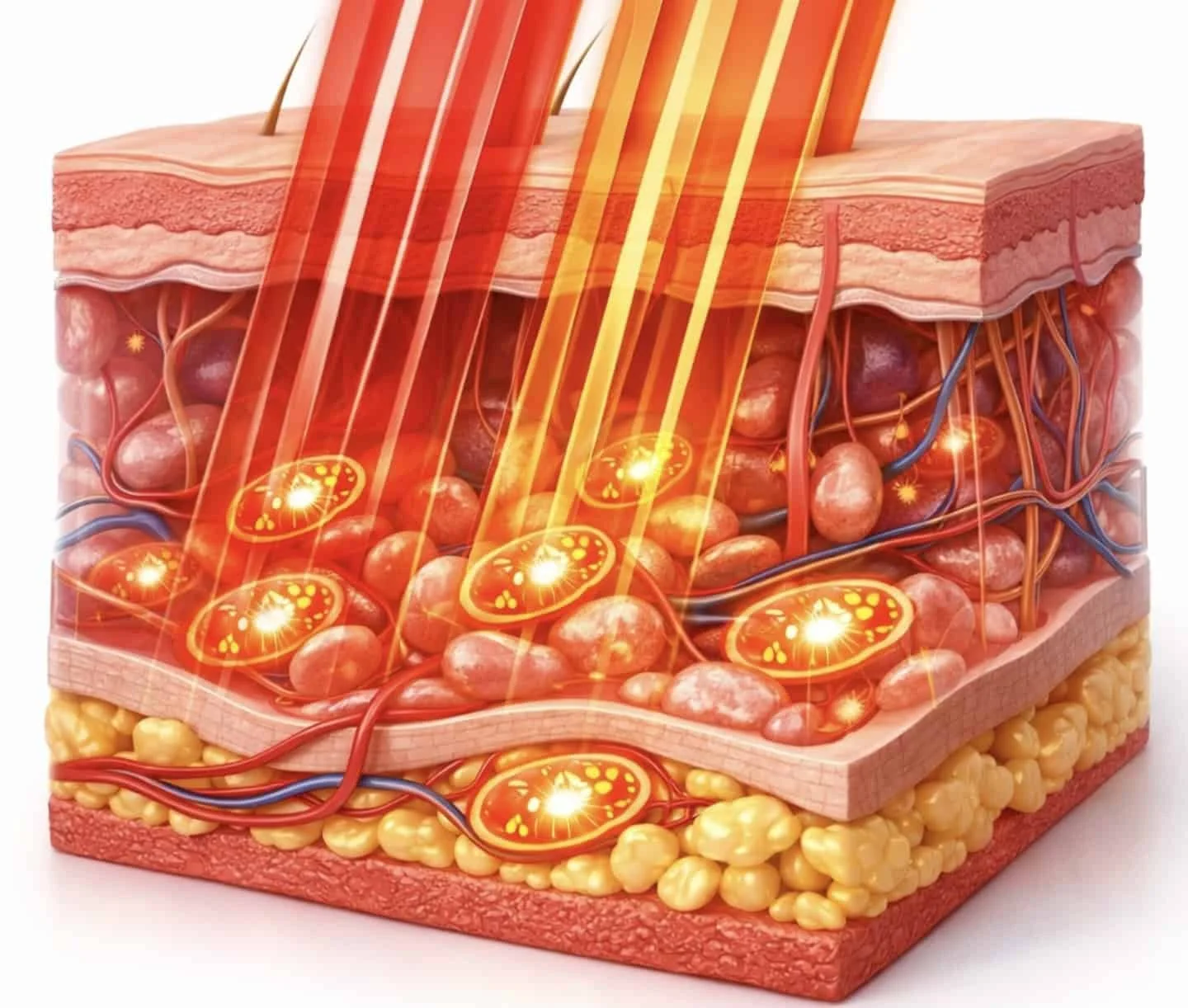
These specific light wavelengths work at the cellular level, stimulating your mitochondria: those tiny energy powerhouses inside every cell: to produce more ATP, which is basically the fuel your cells run on. More cellular energy means your body can heal, repair, and function better across the board.
And here's the best part: you don't need to book a fancy spa appointment. Red light devices are now available for home use, making it easier than ever to get your daily dose of therapeutic light while binge-watching your favourite show.
Why Winter Makes This Even More Important
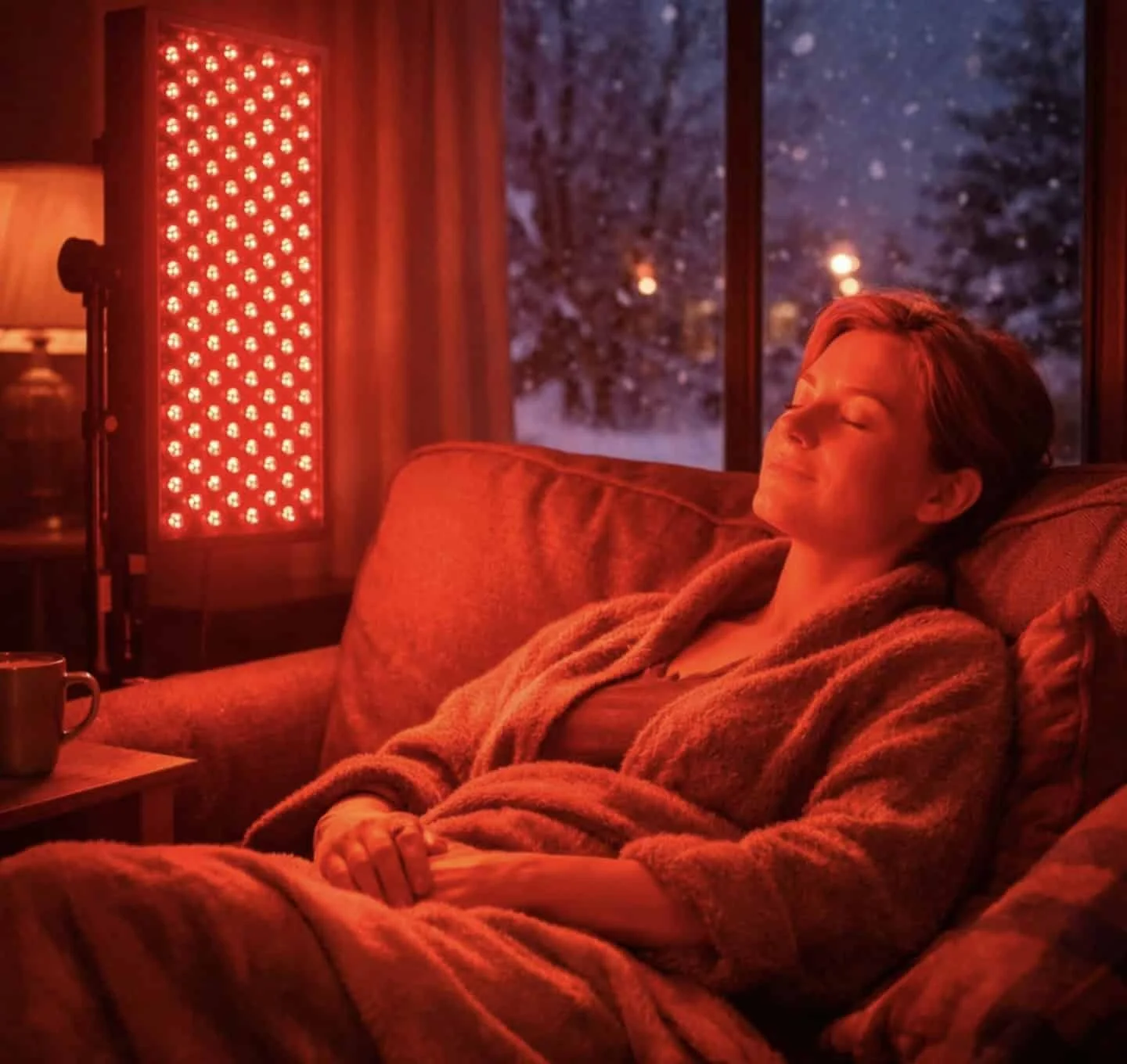
During the darker months, your body takes a hit from reduced sunlight exposure. This isn't just about mood: though Seasonal Affective Disorder (SAD) is real and affects countless Canadians each winter. It's about your entire biological system.
Natural sunlight helps regulate everything from your sleep-wake cycle to your hormone production. When you're stuck indoors or only see the sun through your office window, your body's internal clock gets confused. Your serotonin levels drop, your melatonin production gets wonky, and your energy levels plummet.
Red light therapy steps in to fill that gap. It provides concentrated therapeutic wavelengths that compensate for the sunlight you're missing: helping to keep your biological systems running smoothly even when the days are short and grey.
The Inflammation Connection
If you're dealing with chronic inflammation: whether it's joint pain, muscle soreness, or that nagging feeling that your whole body is just a bit "off": red light therapy can offer some serious relief.
Here's how it works: when red and near-infrared light reaches your tissues, it doesn't just boost energy production. It also triggers a cascade of anti-inflammatory responses throughout your body. This includes reducing inflammatory markers, improving blood flow, and enhancing oxygen circulation to areas that need healing.
This is where red light therapy pairs beautifully with natural anti-inflammatory supplements. Think of it as a one-two punch:
Your curcumin or magnesium supplement works from the inside, supporting your body's natural anti-inflammatory processes
Red light therapy works from the outside, directly stimulating cellular repair and reducing inflammation at the source
Both approaches target inflammation, but through different mechanisms: which means they can complement each other nicely. You're giving your body multiple tools to fight back against chronic inflammation rather than relying on just one strategy.
Muscle Recovery and Physical Performance
Whether you're hitting the gym, shoveling snow, or just trying to keep up with your daily routine, winter can be tough on your muscles. The cold air makes everything feel stiffer, recovery takes longer, and those workout sessions leave you more sore than usual.
Red light therapy has been shown to support muscle recovery in a few key ways:
Reduces muscle fatigue by enhancing cellular energy production
Speeds up repair of micro-tears in muscle tissue
Decreases delayed onset muscle soreness (that achy feeling that hits 24-48 hours after exercise)
Supports joint health by reducing inflammation in surrounding tissues
There’s also research pointing to photobiomodulation (PBM) supporting regenerative processes tied to recovery and performance—here’s the ResearchGate paper if you want to skim it: (study)
Athletes have been using red light therapy for years, but you don't need to be training for a marathon to benefit. If you're someone who struggles with joint pain, arthritis, or just the general stiffness that comes with colder weather, regular red light sessions can help keep you moving more comfortably.
Sleep and Mood: The Winter Game-Changers
This is where red light therapy really shines for winter wellness: pun intended.
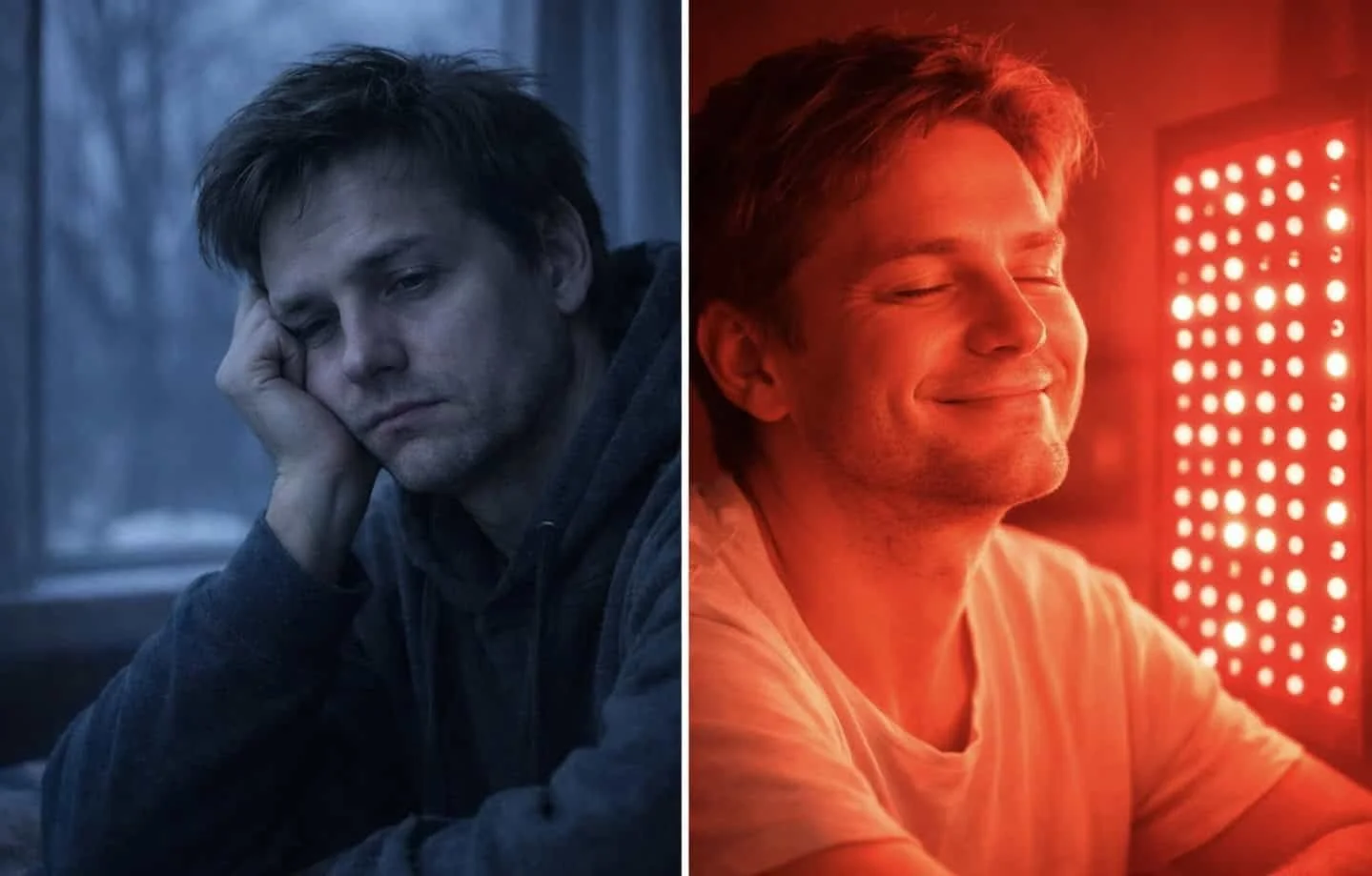
Research shows that red light therapy can be as effective as antidepressant medication for treating Seasonal Affective Disorder, with noticeable effects after just one session. It works by enhancing mitochondrial function in your brain cells and helping to regulate neurotransmitters like serotonin and melatonin.
There’s also a solid open-access paper on near-infrared light and well-being here (worth a quick read): (study)
Translation? You feel more energized during the day and sleep better at night.
Your circadian rhythm: that internal clock that tells you when to feel awake and when to feel sleepy: relies heavily on light exposure. When winter disrupts that natural pattern, everything gets thrown off. Red light therapy helps restore that balance by.:
Supporting healthy serotonin production during the day (your "feel-good" hormone)
Regulating melatonin release at night (your "sleep" hormone)
Reducing neuroinflammation in the brain that can worsen winter sluggishness
The Full-Body Approach
Here's something important to understand: red light therapy isn't just about treating one specific problem area. The benefits are systemic: meaning they affect your entire body.
When you expose your body to therapeutic red light, you're stimulating mitochondrial function across all your major systems. This supports not just one issue but multiple aspects of your health:
Your immune system gets a boost
Your skin produces more collagen (hello, winter glow)
Your cardiovascular system improves circulation
Your nervous system finds better balance
This is why full-body exposure is often recommended over spot treatments. You're not just treating a sore knee or a patch of dry skin: you're supporting your body's overall capacity to heal, repair, and thrive.
Consistency Is Key (Where Coaching Comes In)
Look, I'll level with you: red light therapy works, but only if you actually use it consistently. And let's be real: starting a new health routine in the middle of winter when motivation is already low? That can be tough.
This is where the bigger picture matters. Red light therapy is just one tool in your wellness toolkit. To really see results, you need to pair it with other healthy habits: taking your supplements regularly, staying active, managing stress, and getting decent sleep.
Sometimes we need support to stay consistent. That's exactly what health coaching is for: helping you build sustainable routines that actually stick, even when life gets busy or motivation dips.
Think of your wellness journey like this:
Supplements (like your anti-inflammatory stack) work internally
Red light therapy provides external cellular support
Coaching keeps you consistent with both
All three elements working together create something more powerful than any single approach alone.
Getting Started: Practical Tips
If you're intrigued by red light therapy and want to give it a try, here's what you need to know:
Start small. You don't need hour-long sessions. Most people see benefits from 10-20 minutes per day, 3-5 times per week.
Be patient. While some people notice improvements in mood and energy after the first session, other benefits (like reduced inflammation or improved skin) take a few weeks of consistent use to become noticeable.
Choose quality over price. If you're investing in a home device, look for one that uses actual red and near-infrared wavelengths (typically 660nm and 850nm). There are a lot of cheap knock-offs out there that don't deliver therapeutic levels of light.
Make it convenient. The best tool is the one you'll actually use. Find a time and place where using your red light device fits naturally into your routine: maybe while you're drinking your morning coffee or winding down in the evening.
Track your progress. Keep notes on how you're feeling: energy levels, sleep quality, pain levels, mood. It helps you see patterns and stay motivated when you can look back and see real improvements.
The Science: What the Research Says
If you like having receipts (I do), here are a few studies people often reference when talking about red light therapy / photobiomodulation:
Muscle recovery & performance (PBM): a paper on red light therapy/PBM and how it may support recovery-related regenerative processes in athletes: (Study)
Near-infrared light & well-being: an open-access MDPI article discussing near-infrared light and well-being: (Article)
Mental health (systematic review): a review looking at photobiomodulation and mental health outcomes (big-picture view): (Review)
Quick note—this research is promising, but it’s not a guarantee for everyone. Think of it as a helpful tool, not a miracle.
Your Winter Wellness Routine
Red light therapy isn't a magic bullet, but it's a genuinely powerful tool for supporting your body through the challenging winter months. When you combine it with quality anti-inflammatory supplements, consistent healthy habits, and the accountability that comes from coaching support, you're setting yourself up for more than just surviving winter: you're setting yourself up to thrive.
Your body is designed to heal and repair itself. Sometimes it just needs the right conditions to do its job. Red light therapy provides one of those conditions: cellular energy and support that mimics what your body would naturally get from sunshine, but in a concentrated, therapeutic form.
So if you're tired of feeling tired, dealing with nagging inflammation, or just dragging yourself through another grey Canadian winter, maybe it's time to bring a little sunshine indoors. Your cells will thank you.
(PURCHASE RED LIGHT THERAPY)
This blog post was written by Samuel Friday of Health, Healthy & Healthier & the amazing Penny from Marblism . Try my AI Employee from Marblism it handles everything for me and saves me hours every day.. Tap the link to activate your AI Employee today. LINK (get 10% off for life of your subscription with my link)