Stop the Itch: How to Repair Your Skin Barrier Naturally from the Inside Out
![[HERO] Stop the Scratch: Natural Supplements for Silky-Smooth Skin](https://images.squarespace-cdn.com/content/v1/68a273b291136113e94bb305/bc95dfab-3573-4db5-b331-877f2efe3981/1000028537.jpg)
We’ve all been there: the kind of itch that feels like it’s coming from under your skin, or that tight, "parchment paper" feeling that makes you want to soak in a tub of lotion for three days straight. It’s frustrating, and honestly, it can be a bit of a vibe-killer when you’re just trying to go about your day. Whether you’re dealing with seasonal dryness, a stubborn patch of eczema, or just generally "thirsty" skin, the solution isn’t always found at the bottom of a cream jar.
At Health, Healthy & Healthier, we’re big believers in the idea that what you put into your body is just as important as what you put on it. If your skin barrier is struggling, it’s usually a sign that your internal systems are asking for a little extra support. Think of your skin as a mirror: it’s often reflecting what’s happening deep inside.
If you’re looking up things like natural ways to stop skin itching from inside out, you’re in the right place. We’ll keep it simple and practical: here’s how to repair skin barrier naturally using food-first basics plus targeted, dietary supplements for dry itchy skin relief—especially if you’re trying to find natural supplements for itchy skin or the best supplements for eczema. It’s alright buddy, we’re going to get that comfort (and glow) back together.
Understanding the Skin Barrier (And Why It Fails)
If you’re wondering how to fix a damaged skin barrier with supplements, it helps to know what’s actually breaking down. A damaged barrier isn’t just “dry skin”—it’s a protection problem, and that’s why classic dry skin remedies sometimes don’t fully stick.
Before we dive into the supplements, we need to understand the "why." Your skin has a natural protective layer called the skin barrier. Think of it like a brick-and-mortar wall. The "bricks" are your skin cells, and the "mortar" is made of lipids (fats like ceramides and fatty acids).
When this barrier is healthy, it keeps moisture locked in and keeps irritants: like pollution, allergens, and bacteria: out. But when that mortar starts to crumble? Moisture evaporates, leading to dryness, and irritants get in, leading to that maddening itch and inflammation. This is often the root cause of eczema and chronic dry skin. To fix it, we need to provide the body with the raw materials it needs to repair that "mortar."
Omega-3 Fatty Acids: The Internal Moisturizer
If there is one supplement that acts as the "gold standard" for dry skin, it’s Omega-3 fatty acids. You’ve probably heard of them in relation to heart health, but they are absolute game-changers for your skin—and honestly, the omega-3 for skin benefits are one of the most reliable “inside-out” moves you can make.
Omega-3s, particularly those found in high-quality fish oil or plant-based algae oil, help strengthen the cell membranes of your skin. This improves your skin’s ability to retain moisture and resist environmental damage. When your cells are "fat" with healthy Omegas, they can hold onto water much more effectively.
How it helps: It reduces the production of inflammatory compounds that cause redness and itching—making it one of the most practical natural supplements for itchy skin.
Source: If you’re looking for a plant-based option, algae oil is fantastic because it’s where the fish get their Omegas anyway!
Dosage: Research suggests that a daily intake of 1,000–2,000mg can significantly improve the skin’s barrier function over time.
Vitamin D: The Sunshine Vitamin for Eczema Relief
It’s no coincidence that many people find their skin gets itchier and more prone to flare-ups during the grey, winter months. Vitamin D plays a massive role in skin cell growth and the repair of the skin’s immune system.
For those dealing with eczema, Vitamin D is particularly important—this is a big reason it often shows up on lists of the best supplements for eczema. It helps regulate the production of antimicrobial peptides that protect the skin from infections: which is a common issue when you’re constantly scratching. It also helps calm down the overactive immune response that leads to inflammation. While we always advocate for some safe sun time, a supplement is often necessary to keep your levels stable.
> If you’re trying to dial in vitamins for itchy skin and inflammation, Vitamin D is one of the first ones worth checking (especially in Canada winters).
Probiotics: The Gut-Skin Connection
It might seem strange to take something for your stomach to help your skin, but the gut-skin axis is a very real thing. An imbalanced gut: often called dysbiosis: can lead to systemic inflammation that shows up right on your face (and arms, and legs). This is why you’ll see people talking about gut-skin axis and eczema treatment—not because probiotics are a magic cure, but because your gut can absolutely nudge your immune system in either direction.
When your gut is happy and populated with diverse, beneficial bacteria, your immune system is less likely to overreact to environmental triggers. This is huge for eczema sufferers. Adding a high-quality probiotic, or even certain medicinal mushrooms like Turkey Tail, can help support a healthy microbiome and, by extension, calmer skin.

Vitamin E: The Ultimate Shield
Vitamin E is a powerful antioxidant that lives in the sebum (oil) produced by your skin. It’s your skin’s first line of defense against "lipid peroxidation": a fancy way of saying it prevents the healthy fats in your skin from going rancid due to stress or UV damage.
I really like a natural Vitamin E complex derived from sunflower seeds. Unlike synthetic versions, a natural complex provides a full spectrum of tocopherols and tocotrienols, which work together to keep your skin supple and protected. It acts like a built-in shield, ensuring that your skin barrier stays intact even when you’re facing harsh winds or dry indoor heating.
The Secret "Smoothness" Trio: Silica, Astaxanthin, and Vitamin C
If you want to move beyond just "not itchy" and toward "silky-smooth," you might want to look at a few powerhouse nutrients that often fly under the radar.
1. Silica from Bamboo
Silica is a trace mineral that is essential for the production of collagen. As we age, our silica levels naturally drop. Research published in the International Journal of Endocrinology shows that silica supplementation can actually increase skin thickness and reduce fine lines by strengthening the collagen matrix. Bamboo extract is one of the richest natural sources of silica—so if you’ve been curious about silica supplements for skin thickness and hydration, this is the “why.” Thicker skin means a more resilient barrier, which means less dryness.
2. Astaxanthin (The Pink Powerhouse)
This antioxidant is what gives salmon and flamingos their pink color! Derived from microalgae, Astaxanthin is incredibly potent: some studies suggest it’s 6,000 times stronger than Vitamin C. It accumulates in the skin tissue, providing internal "sun protection" and significantly improving skin texture and moisture levels. Just 6mg a day can make a noticeable difference in how smooth your skin feels within about six weeks.
3. Vitamin C from Acerola Cherry
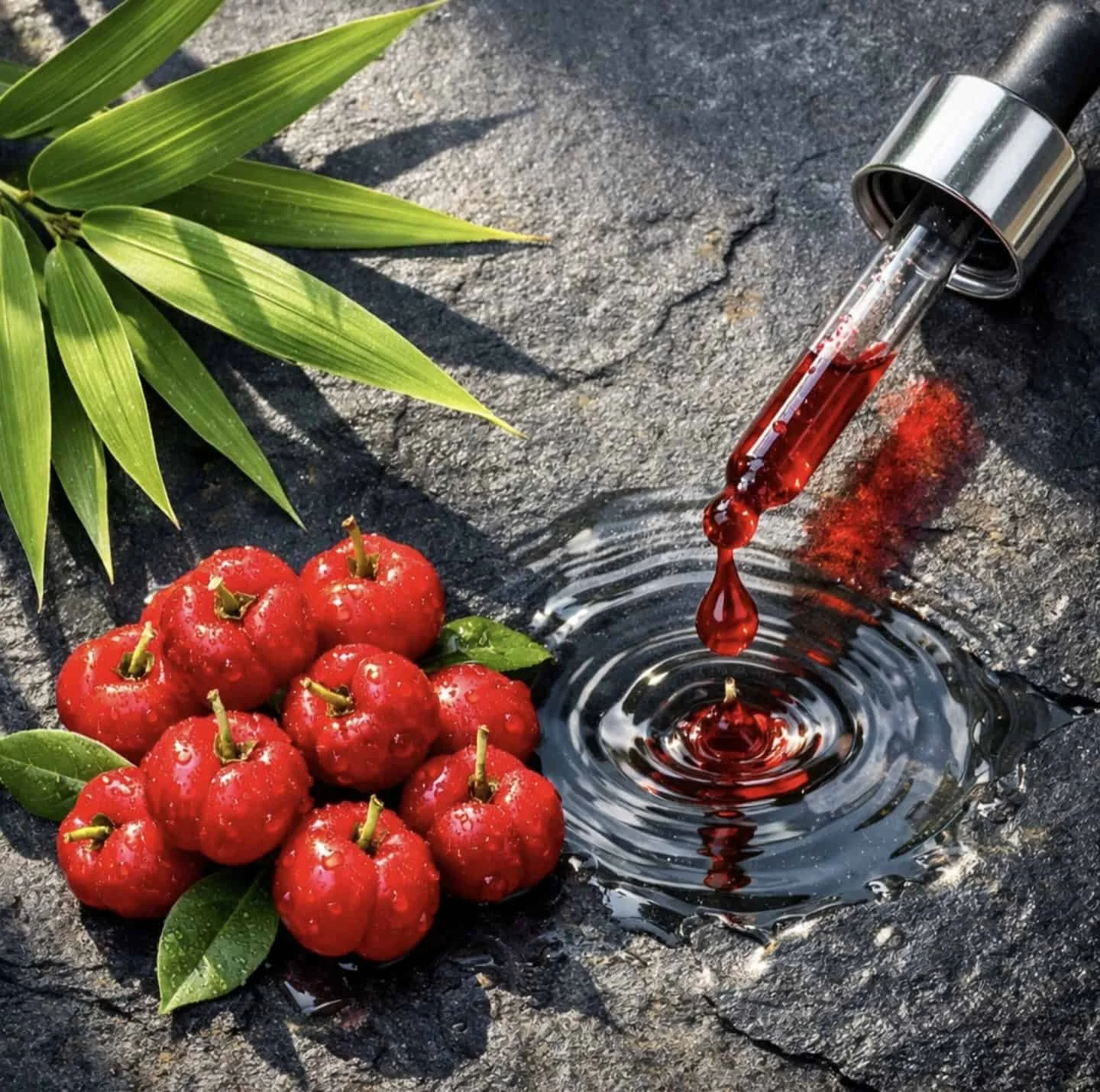
We all know Vitamin C is good for us, but for skin, it’s non-negotiable. It’s the "key" that unlocks collagen production. Without it, your body can’t build the stable collagen structures needed for firm, hydrated skin. Acerola cherries are a fantastic natural source, providing up to 1,700mg per 100 grams. This natural form often comes with cofactors that help your body absorb it better than synthetic versions.
Fighting Inflammation from Within
When your skin is itchy and red, it’s a sign of a "fire" inside. Along with your daily vitamins, certain adaptogens can help lower the overall inflammatory load on your body.
Mushrooms like Chaga are legendary for their anti-inflammatory properties. By helping to modulate the immune system, Chaga can help reduce the frequency and intensity of skin flare-ups. It’s all about creating a calm internal environment so your skin doesn't have to stay in "defense mode" all the time.
Putting It All Together: Your "Stop the Itch" Protocol
I know that's a lot of information: don't feel like you have to go out and buy every single bottle tomorrow! It's okay to start slow. If you’re feeling overwhelmed, here’s a simple way to prioritize (and yes—this is basically how to fix a damaged skin barrier with supplements without going overboard):
The Essentials: Start with a high-quality Omega-3 (2,000mg) and Vitamin D. These address the moisture barrier and the immune response directly—two big pillars of how to repair skin barrier naturally.
The Repair Crew: Add Vitamin C and E. These work synergistically (meaning they’re better together!) to protect and repair, and they fit nicely under “vitamins for itchy skin and inflammation.”
The Smoothness Boosters: If you’ve got the basics covered, look into Silica (Bamboo) or Astaxanthin to really level up that skin texture.
If you want the quick takeaway: this stack is a practical set of dietary supplements for dry itchy skin relief that supports moisture, inflammation balance, and barrier rebuilding—the stuff you wish a lotion could do all by itself.
> "A 12-week study demonstrated that taking 2.5 grams of collagen daily: along with biotin: significantly improved skin hydration, roughness, and elasticity."
It’s also worth mentioning that consistency is key. Skin cells take about 28 to 40 days to turn over, and as we get older, that process slows down. You might not see results in 48 hours, but give it 4 to 6 weeks of consistent support, and your skin will definitely thank you.
Final Thoughts
Living with dry, itchy skin is more than just a cosmetic issue: it’s a comfort issue. It’s hard to feel your best or focus on your life goals when you’re physically uncomfortable in your own skin.
By shifting your focus from "fixing" the surface to "nourishing" the roots, you’re giving your body the tools it needs to heal itself naturally. That’s the heart of natural ways to stop skin itching from inside out—support your barrier, calm the inflammation, and don’t ignore the gut piece.
Keep drinking your water, keep your gut happy, and give these natural supplements a try. You deserve to feel comfortable, hydrated, and silky-smooth! If you're looking for more ways to support your body naturally, feel free to check out our full range of guides. You've got this!
Note: While these supplements are generally considered safe, we always recommend chatting with your healthcare provider before starting a new routine, especially if you have underlying health conditions or are taking other medications. We're here to help you navigate your wellness journey, but your personal doctor always knows your specific history best!

Internal ad