Procrastination Isn't Laziness: The Truth About Why We Avoid Work
This page may feature affiliate links
![[HERO] Procrastination Isn't Laziness: The Truth About Why We Avoid Work](https://images.squarespace-cdn.com/content/v1/68a273b291136113e94bb305/1769968243537-IF31O98RB4MHEOXTGBWT/1000022941.jpg)
You've been staring at that project for three days now. You know it needs to get done. You want to get it done. But every time you sit down to start, suddenly your brain convinces you that reorganizing your desk, scrolling through your phone, or making another cup of coffee is absolutely essential.
And then comes the guilt. The frustration. The nagging voice telling you you're just lazy.
Here's the truth: you're not lazy. Procrastination and laziness aren't even close to the same thing, and understanding that difference might just change everything.
The Real Difference Between Procrastination and Laziness
Let's clear this up right now: procrastination is not about being unwilling to work.
When you're truly lazy, there's no internal battle. A lazy person simply doesn't care about getting something done and feels no guilt about it. They're indifferent. No stress, no conflict, just a genuine lack of interest in putting in effort.
But procrastination? That's a completely different animal. Procrastination is an emotional regulation problem, not a character flaw.

When you procrastinate, you're experiencing intense internal conflict. You know you should be working on that report, starting that workout routine, or finally tackling those emails. You genuinely want the task completed. But something inside you: anxiety, overwhelm, fear: keeps hitting the brakes. And that creates a spiral of guilt, stress, and self-criticism that makes the whole thing worse.
Think about the last time you procrastinated. Were you actually relaxing while avoiding the task? Probably not. You were likely feeling anxious, guilty, or stressed the entire time. That's the hallmark of procrastination: you're not at peace with your choice to delay.
Why Your Brain Chooses Avoidance
So if procrastination isn't laziness, what's actually happening in your brain?
Here's where it gets interesting: your brain is trying to protect you. When you face a task that triggers uncomfortable emotions: fear of failure, perfectionism, self-doubt, feeling overwhelmed: your brain sees that discomfort as a threat. And what does your brain do with threats? It finds ways to avoid them.
Common emotional triggers that spark procrastination include:
Fear of failure or judgment : "What if I mess this up and everyone sees?" (If this one hits home, here’s a deeper dive: Fear of failure—and how to conquer it.)
Perfectionism : "If I can't do it perfectly, why bother starting?"
Feeling overwhelmed : "This is too big; I don't even know where to begin."
Self-doubt : "I'm not capable of doing this well."
Lack of structure : "I don't know the right way to approach this."
When these emotions surface, procrastination becomes a coping mechanism. Avoiding the task provides immediate emotional relief: even if it's temporary and even though you know you're making things harder for yourself in the long run.
It's not that you're weak-willed or undisciplined. It's that your emotional brain is overriding your logical brain, and that's something you can learn to work with.

The Procrastination Cycle (And Why It Sticks)
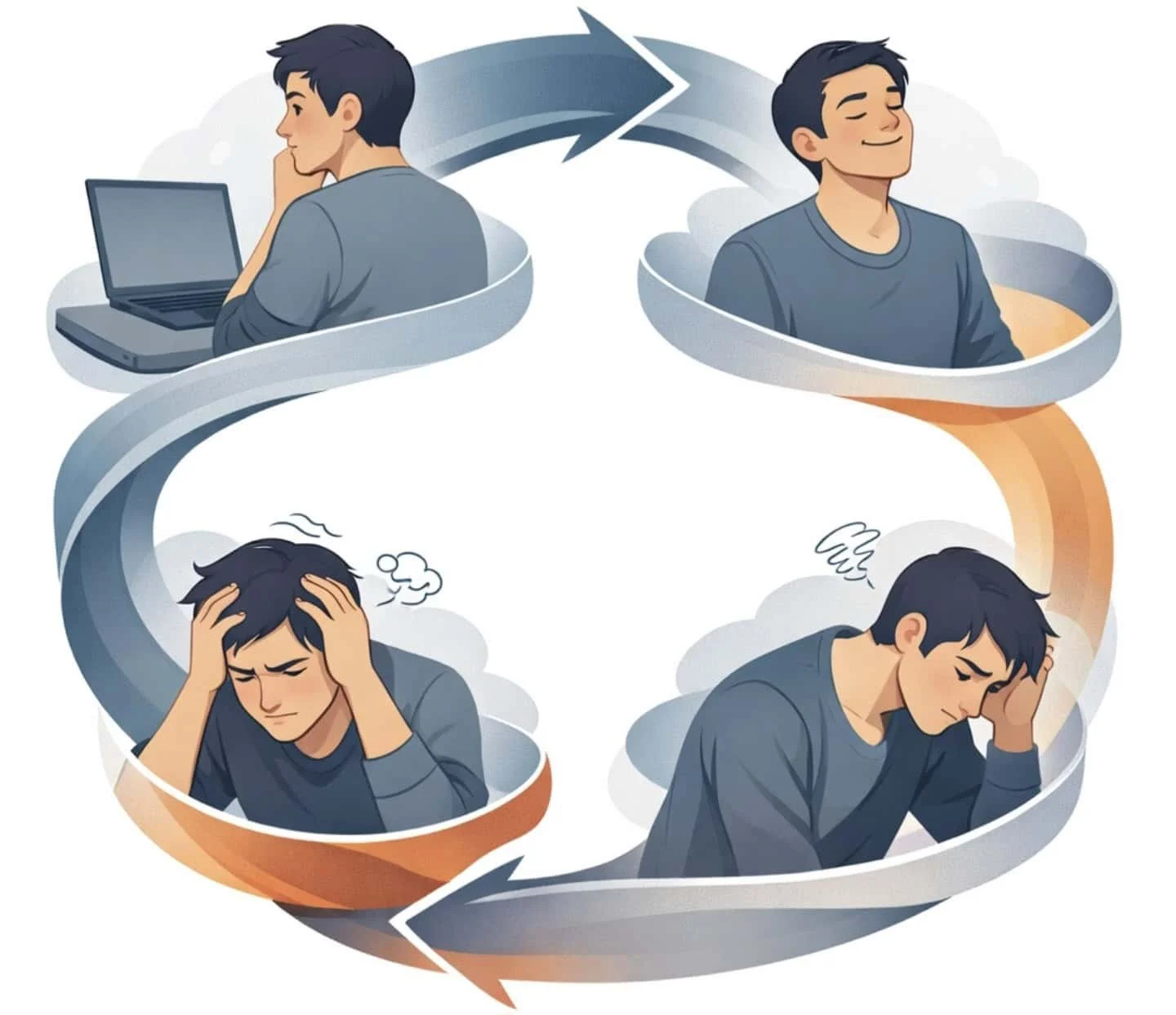
Here's the frustrating part: procrastination actually reinforces itself through a psychological loop.
You avoid a task because it triggers anxiety. Avoiding it gives you short-term relief, which feels good in the moment. Your brain registers that relief as a reward, which makes you more likely to procrastinate again the next time you face something uncomfortable. Meanwhile, the guilt and stress build up, making the task feel even more overwhelming when you finally force yourself to face it.
It's a cycle: Trigger → Avoidance → Relief → Guilt → Increased Anxiety → Repeat.
Breaking this cycle doesn't happen by "trying harder" or scolding yourself into action. It happens by understanding the emotional drivers beneath your avoidance and building the mental tools to manage them differently.
Building the Mental Fortitude to Move Forward
This is where life coaching becomes a game-changer. Because here's the thing: procrastination isn't solved by a productivity hack or a better planner. It's solved by developing mental fortitude and a more determined mindset that can handle discomfort without running from it.
If you want a practical read that pairs nicely with this, check out Gaining forward momentum through positive reclamation.
Life coaching helps you:
Identify your unique emotional triggers : What specific feelings cause you to procrastinate? Is it fear of judgment? Perfectionism? Lack of clarity? Once you understand your patterns, you can interrupt them.
Reframe how you view tasks : Instead of seeing a project as a threat, coaching teaches you to reframe it as an opportunity for growth, even if it's uncomfortable. That shift in perspective changes everything.
Break the all-or-nothing thinking : Procrastinators often think they need massive chunks of time or perfect conditions to start. Coaching helps you embrace imperfect action and small, manageable steps that build momentum.
Develop self-compassion : Beating yourself up for procrastinating only adds more negative emotion to the mix, which triggers more avoidance. Learning to treat yourself with kindness while still holding yourself accountable is a powerful skill.
Create accountability and structure : Sometimes we need external support to push through resistance. A coach provides that structure and keeps you moving forward, even when your brain wants to hit pause.
At Health, Healthy & Healthier, we focus on building that inner resilience and determined mind. It's not about willpower alone: it's about rewiring how you respond to discomfort and developing the mental tools to take action even when you don't feel like it.
Supporting Your Brain and Body Through the Process
While mindset work is critical, there's also a physical component to procrastination that often gets overlooked. Stress, brain fog, and anxiety don't just live in your head: they impact your body's ability to focus, make decisions, and take action.
When your brain is foggy or your nervous system is constantly triggered by low-level anxiety, even the simplest tasks feel monumental. That's why supporting your cognitive health and managing stress can make a real difference in breaking procrastination cycles.
Natural supplements designed for anxiety relief and cognitive support can help calm that fight-or-flight response that keeps you stuck. When your brain feels clearer and your stress levels are more manageable, it's easier to sit down and actually do the thing instead of spiraling into avoidance.
Think of it this way: you wouldn't expect a car to run smoothly on empty or with dirty oil. Your brain needs proper support too: adequate sleep, good nutrition, stress management, and sometimes a little extra help from natural supplements to keep your mental engine running efficiently.
This doesn't replace the mindset work or coaching: it supports it. When your brain feels better physically, the mental strategies become easier to implement.
You're Not Broken: You Just Need Better Tools
If you've been beating yourself up for procrastinating, I want you to take a breath and cut yourself some slack. You're not lazy. You're not broken. You're not lacking discipline or character.
You're a human being whose brain is trying to protect you from uncomfortable emotions: it's just doing it in a way that isn't serving you anymore.
The good news? You can learn different strategies. You can build the mental fortitude to face tasks without running from them. You can train your brain to handle discomfort, take imperfect action, and keep moving forward even when it feels hard.
And you don't have to figure it all out alone.

Ready to Break the Cycle?
If procrastination has been holding you back from the work, goals, or life you really want, it's time to address the root cause: not just the symptoms.
Life coaching gives you the personalized support, accountability, and tools to rewire those avoidance patterns and build a determined, resilient mindset. No judgment, no shame: just practical strategies that actually work.
Let's work together to help you stop avoiding and start achieving. Whether it's tackling that big project, building healthier habits, or finally moving toward goals you've been putting off, I'm here to support you through the process.
👉 Book a coaching session today and let's build the mental strength to turn procrastination into progress.
You've got this. You just need the right tools and support to prove it to yourself.