GABA: Your Brain's Natural 'Brake' for Stress and Better Sleep
This page features affiliate links
![[HERO] GABA: Your Brain's Natural 'Brake' for Stress and Better Sleep](https://images.squarespace-cdn.com/content/v1/68a273b291136113e94bb305/06ea66d5-aa26-4ed2-89fa-3ebae4aaaeed/1000023914.jpg)
Click picture to purchase off of Amazon
Ever feel like your brain just won't shut off? Like your thoughts are running on a hamster wheel at 2 a.m., or your anxiety keeps revving up no matter how much you try to calm down? That restless, wired feeling isn't just "all in your head", it's actually a sign that your brain might need a little more of something called GABA.
GABA (gamma-aminobutyric acid) is your brain's natural calming neurotransmitter. Think of it as the brake pedal for your nervous system. While other brain chemicals like glutamate hit the gas and get your neurons firing, GABA steps in to slow things down, helping you feel relaxed, focused, and ready for rest. And here's the thing, when your GABA levels are balanced, you're better equipped to handle stress, quiet anxious thoughts, and finally get the deep sleep your body craves.
Let's dig into how this powerful little molecule works and why it might be the missing piece in your wellness puzzle.
What Exactly Is GABA?
GABA is the primary inhibitory neurotransmitter in your central nervous system. That's science-speak for "the thing that tells your brain to chill out." It's present in about 30-40% of all synapses in your brain, which means it's basically everywhere, keeping neural activity in check across virtually every brain region.
When GABA binds to receptors on your neurons, it creates what's called hyperpolarization. Don't worry about the fancy term, it just means it makes the nerve cells less likely to fire off signals. This prevents your neurons from becoming overexcited, which is exactly what you need when stress or anxiety tries to take over.
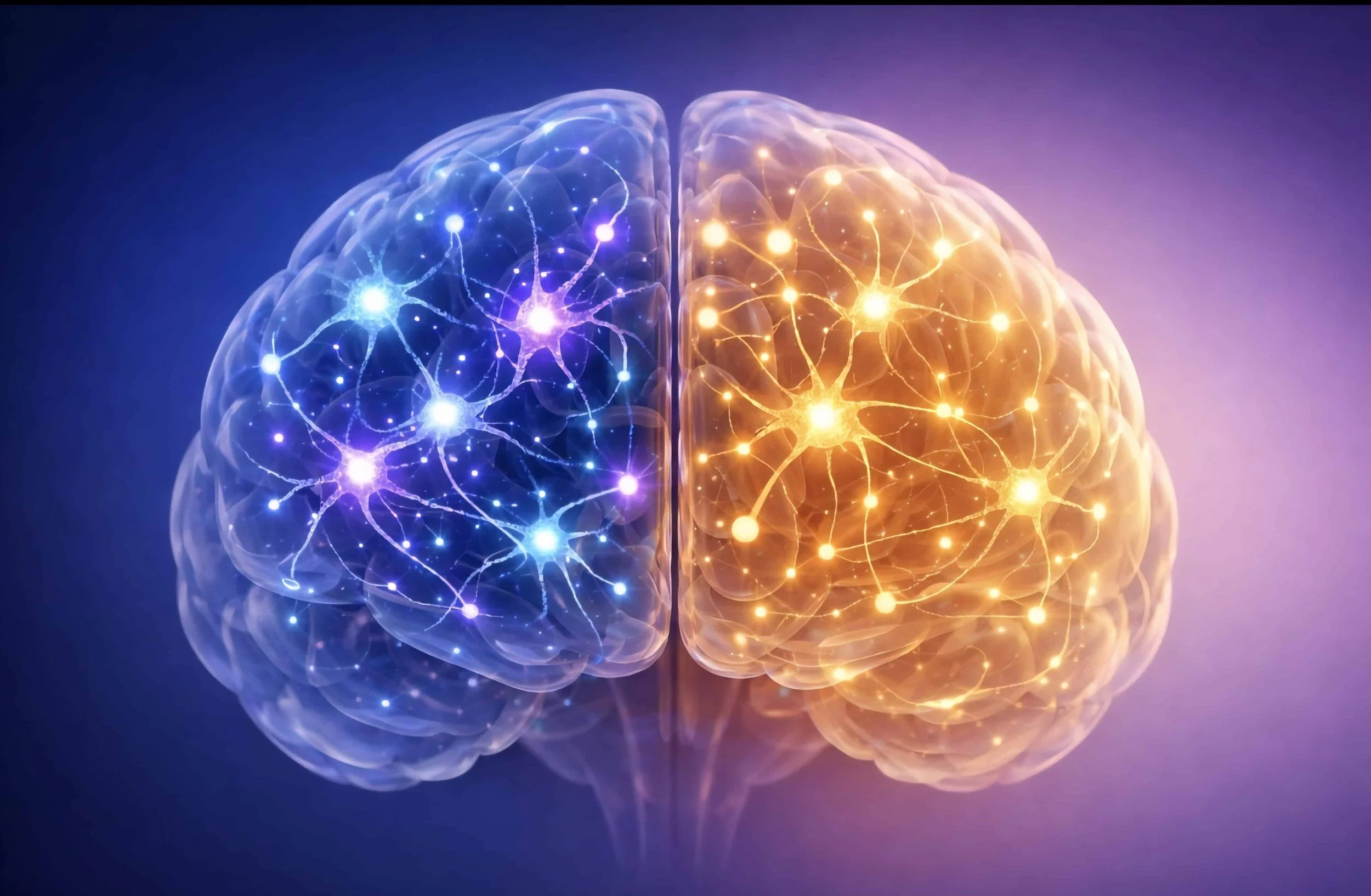
Without enough GABA, your brain becomes like a car with no brakes, constantly accelerating, never slowing down. That's when you start experiencing racing thoughts, tension, restlessness, and those nights where sleep feels impossible.
GABA and Anxiety: The Science Behind the Calm
If you've ever felt that tight knot in your chest or the constant "what if" loop running through your mind, you know anxiety isn't just mental, it's physical. Your nervous system is stuck in overdrive, and that's where GABA comes in.
Research is backing up what many people have experienced firsthand. A recent 2025 study published in Nature found that long-term GABA supplementation significantly mitigated anxiety symptoms. Participants who took GABA consistently over several weeks reported feeling calmer, less reactive to stress, and more emotionally balanced.
Here's why this matters: GABA doesn't just mask anxiety symptoms, it actually helps regulate the underlying neural activity that drives anxious feelings. By calming overactive neurons, GABA creates space for your mind to settle. You're not numbing yourself out; you're restoring balance.
And honestly, in a world that feels like it's constantly demanding more from us, having a natural way to support your nervous system is pretty powerful.
Stress Response: Hitting the Brakes When Life Speeds Up
Stress is unavoidable, it's part of being human. But chronic stress? That's where things get messy. When you're constantly in fight-or-flight mode, your body pays the price: elevated cortisol, poor sleep, brain fog, and eventually burnout.
GABA plays a critical role in your stress response. According to a comprehensive systematic review published in 2020, GABA supplementation showed promising effects on both stress reduction and sleep quality. The researchers found that GABA helped participants feel less overwhelmed by daily stressors and improved their ability to recover mentally and physically.

Think of it this way: when you're stressed, your sympathetic nervous system (the "gas pedal") dominates. GABA helps activate your parasympathetic nervous system (the "brake"), signaling to your body that it's safe to relax. This shift is essential for maintaining your mental fortitude, something we talk about a lot at Health, Healthy & Healthier.
Building resilience isn't just about pushing through. It's also about giving your nervous system the support it needs to recover and reset.
Sleep: Why GABA Is Your Ticket to Restful Nights
Let's be real, if you're not sleeping well, everything else suffers. Your mood, your focus, your energy, even your ability to handle stress. And guess what? GABA is directly involved in regulating your sleep-wake cycle.
Your brain needs to transition from "awake and alert" to "calm and restful," and GABA is the bridge that makes that happen. When GABA levels are low, your brain struggles to make that shift, leaving you tossing and turning or waking up feeling like you never really slept at all.
A 2019 study published in PMC looked at the effects of GABA combined with L-theanine (an amino acid found in tea) on sleep quality. The results? Participants fell asleep faster, stayed asleep longer, and reported feeling more refreshed in the morning. The combination worked synergistically, GABA calmed the nervous system while L-theanine promoted relaxation without drowsiness.
This is huge for anyone dealing with insomnia or restless sleep patterns. You don't need to rely solely on prescription meds or melatonin (though those have their place). Supporting your body's natural GABA production can make a real difference.
How GABA Actually Affects Your Nervous System
You might be wondering: "Okay, but how does taking GABA orally even work? Doesn't it have to cross the blood-brain barrier?"
Great question. For years, scientists debated whether oral GABA supplementation could actually affect the brain, since GABA molecules are fairly large and the blood-brain barrier is notoriously selective. But new research is changing that narrative.
A 2024 study published in MDPI explored how oral GABA influences the nervous system. The findings suggest that even if GABA doesn't cross the blood-brain barrier in large amounts, it still has significant effects on the peripheral nervous system and may influence the gut-brain axis: the powerful communication network between your digestive system and your brain.
This makes sense when you consider that much of your body's GABA is produced in the gut. Supporting gut health and taking oral GABA may work together to promote overall nervous system balance. (If you're interested in learning more about this connection, check out our post on the gut-brain connection.)
Boosting Your GABA Naturally (And With a Little Help)
So how do you actually support healthy GABA levels? Here are a few evidence-based strategies:
Natural Ways to Increase GABA:
Exercise regularly: Physical activity naturally boosts GABA production and helps regulate mood
Practice yoga or meditation: Both have been shown to increase GABA levels in the brain
Eat fermented foods: Kimchi, sauerkraut, and yogurt support gut health, which influences GABA production
Prioritize sleep: Your body produces GABA during deep sleep, so good sleep hygiene is essential
Limit alcohol and caffeine: Both can disrupt GABA function over time
GABA Supplementation:
If you're dealing with chronic stress, anxiety, or sleep issues, supplementation might be worth considering. Look for high-quality GABA supplements, ideally combined with complementary nutrients like L-theanine, magnesium, or vitamin B6.
At Health, Healthy & Healthier, we offer both personalized coaching and supplement guidance to help you build mental fortitude and support your body's natural calming systems. Whether you're dealing with stress, sleep struggles, or just want to feel more balanced, we're here to help you find what works for your unique needs.
The Bottom Line
Your brain is designed to balance excitement and calm, action and rest. But in today's always-on world, that balance is harder to maintain. GABA is your nervous system's natural brake: the biochemical signal that says, "It's okay to slow down now."
Whether you're struggling with anxiety, chronic stress, or restless nights, supporting your GABA levels can make a real difference. The science is clear: GABA supplementation, combined with lifestyle strategies and the right support, can help you reclaim your calm and build lasting resilience.
You don't have to white-knuckle your way through stress or accept sleepless nights as your new normal. Sometimes, your brain just needs a little help hitting the brakes.