Motivation vs Discipline: The Secret to Achieving Your Long-Term Goals
![[HERO] Motivation vs Discipline: Which Is Better For Your Long-Term Goals?](https://images.squarespace-cdn.com/content/v1/68a273b291136113e94bb305/6e84972b-f356-48de-bf97-c4012b820462/1000023961.jpg)
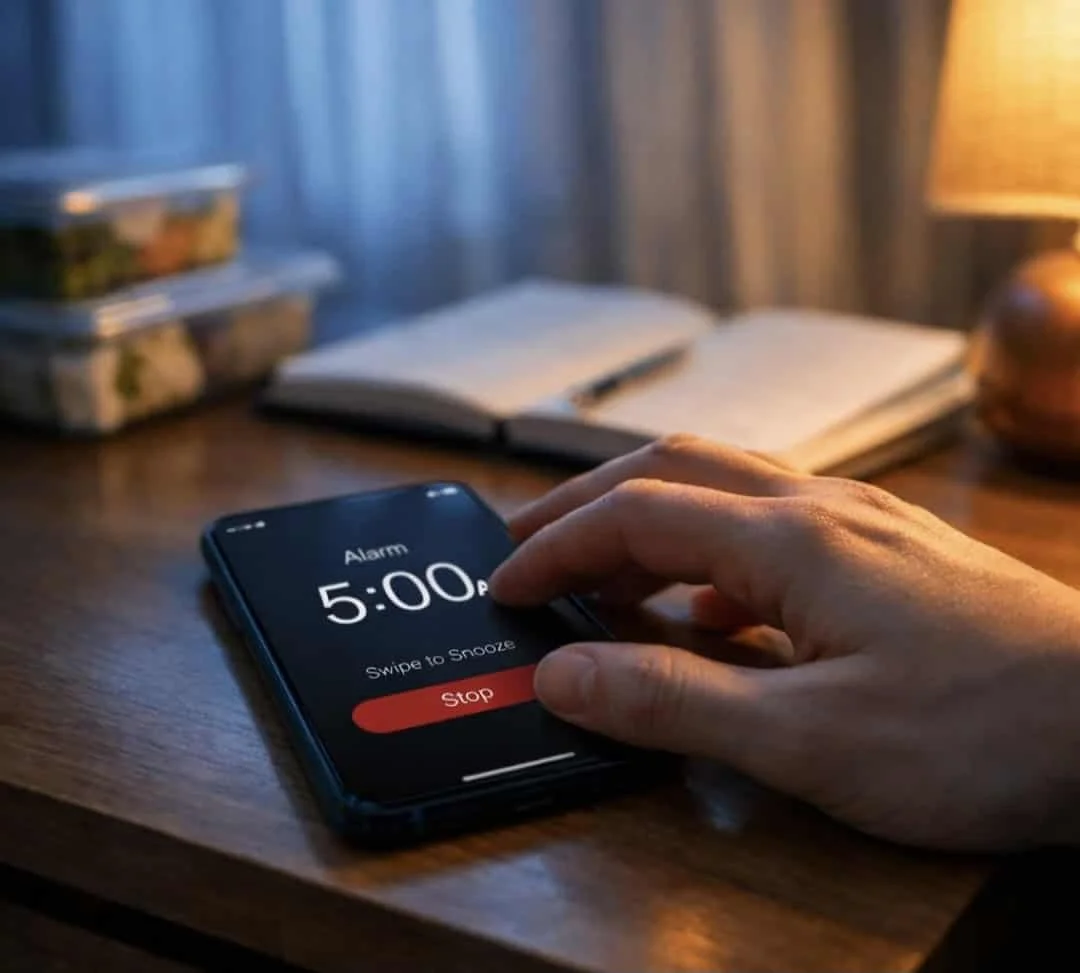
You've probably been there: scrolling through Instagram at 11 PM, watching fitness transformations and business success stories, feeling that familiar surge of "Yes! Tomorrow I'm going to change everything!" That whole motivation vs discipline battle shows up right here—because you set your alarm for 5 AM, meal prep containers at the ready, and a brand-new planner sitting on your nightstand.
Then tomorrow comes. The alarm goes off. And suddenly, that fire you felt last night? Nowhere to be found.
Here's the truth: motivation got you excited, but discipline is what would've gotten you out of bed.
If you're serious about achieving personal goals: whether that's finally sticking to a workout routine, building a business, or creating healthier habits: you need to understand the fundamental difference between motivation and discipline. And spoiler alert: one of them is far more reliable than the other.
What is Motivation? (And Why It's So Unreliable)
Motivation is that emotional spark: the feeling that makes you want to take action. It's the excitement you get when you watch an inspiring TED Talk, the energy surge after reading a success story, or the determination that hits after a tough conversation with yourself in the mirror.
Motivation is a feeling. And like all feelings, it comes and goes.
Think about it: motivation relies heavily on external factors. Maybe you're motivated because:
There's a deadline looming
Someone challenged you or made a comment that lit a fire under you
You saw results quickly in the beginning
You're in a good mood and feeling optimistic
But what happens when those external factors disappear? When the deadline passes, when nobody's watching, when results slow down, or when you wake up tired and stressed? That's when motivation vanishes like morning fog.
The problem isn't that motivation is bad: it's actually a fantastic starting point. The issue is when we rely on it as our only fuel source for long-term goals. That's when we end up in what I call the "yo-yo effect."
The Yo-Yo Effect: Why Motivation Alone Keeps You Stuck
You've seen this pattern before (maybe you've lived it):
Week 1: Super motivated. You're crushing your goals, eating perfectly, working out daily, feeling like a superhero.
Week 2: Still going strong, but it's getting harder. You skip one workout. Then another.
Week 3: Motivation is fading. You're tired. Life got busy. You tell yourself "I'll start fresh on Monday."
Week 4: You've completely fallen off. Now you're back to square one, feeling guilty and defeated.
This is the yo-yo effect in action: and it happens in fitness, business, relationships, and every other area of life where we rely solely on motivation. When you depend on feeling motivated to take action, you're essentially gambling with your goals. Some days you'll feel it, most days you won't.
Achieving personal goals coaching often starts by helping people recognize this pattern. Because once you see it clearly, you can break free from it.
What is Discipline? (The Unsexy Secret to Real Success)
Discipline doesn't get the hype that motivation does. It's not flashy. It doesn't come with pump-up music and inspirational quotes. But here's what discipline does do: it shows up every single day, regardless of how you feel.
Discipline is the ability to do what needs to be done, even when you don't feel like doing it. It's brushing your teeth when you're exhausted. It's showing up to work even when you'd rather stay in bed. It's honoring commitments to yourself when nobody else is watching.
While motivation is a feeling, discipline is a habit. And habits don't require emotional energy: they just run on autopilot.
Think about your morning routine. You probably don't need motivation to make coffee or brush your teeth, right? You just do it. That's discipline in action. And the beautiful thing about discipline is that once you build it, it becomes your new default setting.
Your brain's reward system actually reinforces disciplined behavior when your actions align with your long-term goals. Each time you follow through: even when it's hard: you're strengthening the neural pathways that make it easier next time.
Building Mental Fortitude for Achieving Personal Goals (Small, Consistent Wins)
Here's where most people get discipline wrong: they try to build it by making massive changes overnight. They go from zero workouts to seven days a week. From eating whatever they want to a strict meal plan. From sleeping in until 9 AM to waking up at 5 AM.
That approach almost always fails. Not because you're weak, but because you're trying to build discipline like a light switch when it actually works like a dimmer.
Building mental fortitude (which is really what discipline is) happens through small, consistent wins that compound over time. Here's how to start:
Start Embarrassingly Small
Make your first promise to yourself so easy that it feels almost ridiculous. Want to start working out? Don't commit to an hour at the gym. Commit to 10 pushups every morning. Want to read more? Don't aim for a book a week. Aim for one page before bed.
The goal isn't to transform your life in week one: it's to prove to yourself that you can keep a promise, even a tiny one.
3 Ways to Build Discipline Today (Quick Wins)
Attach new disciplined behaviors to existing habits. This is called "habit stacking," and it's incredibly effective. For example:
Start embarrassingly small — pick one tiny action you can do daily (like 10 pushups or one page of reading)
Stack your habits — link your new action to an existing routine (coffee → journal; brushing teeth → squats; closing laptop → 10-minute walk)
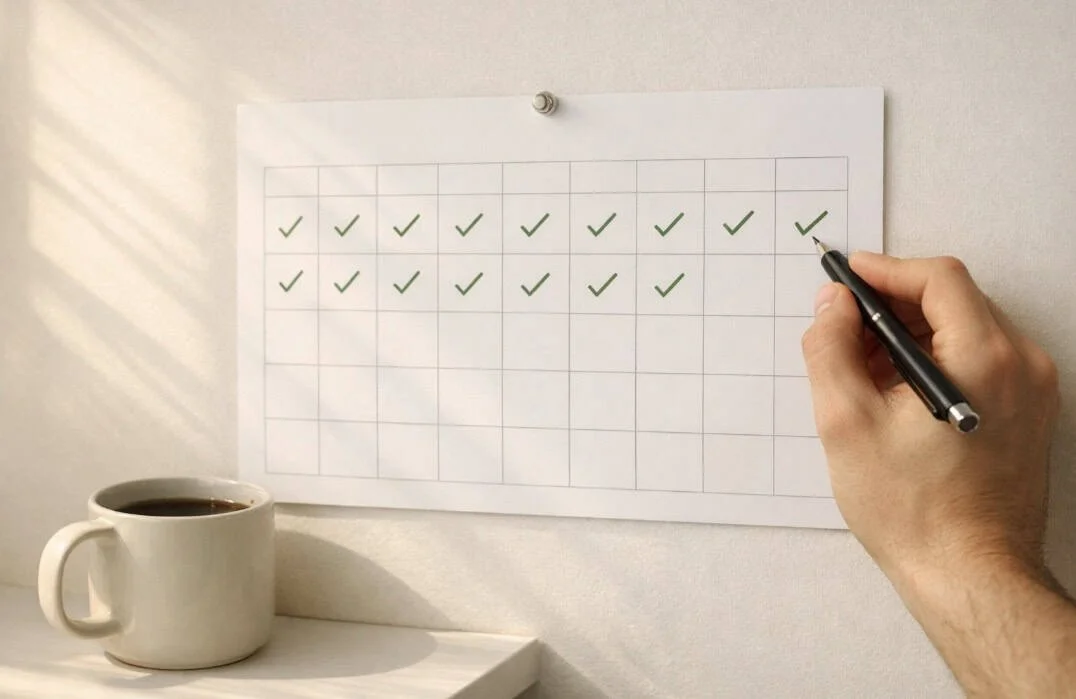
Track your streak (and rebound fast) — mark it on a calendar or app, and if you miss a day, just restart the next day
By anchoring new disciplines to established routines, you remove the need to rely on motivation or willpower.
Track Your Streak
There's something powerful about seeing a visual representation of consistency. Whether it's marking an X on a calendar or using a habit-tracking app, watching your streak grow reinforces your identity as someone who follows through.
But here's the key: if you miss a day, don't spiral. Just get back on track the next day. Discipline isn't about perfection: it's about resilience.
If you're struggling to figure out which habits to build or how to structure your approach, this is exactly where life coaching in Canada can make a massive difference. A good coach helps you bridge the gap between wanting to do something and actually doing it.
Motivation vs Discipline: The Winning Formula (Motivation + Discipline)
Here's the thing: I'm not saying motivation is useless. Far from it. Motivation is the spark that gets you started. It's the reason you picked up this article. It's the initial energy that makes you believe change is possible.
But discipline is what carries you through when that spark dims.
The most successful people don't choose between motivation and discipline: they use both strategically:
Motivation provides direction and the initial emotional fuel
Discipline ensures execution and maintains consistency
Think of motivation as the match that lights the fire, and discipline as the wood that keeps it burning all night long. You need both, but only one of them is renewable without external conditions.
This is also why the 7 Mindset Shifts for Achieving Your Goals When You Feel Like Quitting are so critical: they help you build the mental frameworks that support discipline even when motivation runs dry.

How Life Coaching Can Help You Build Lasting Discipline
Here's what most people don't realize: discipline isn't an innate personality trait that some people have and others don't. It's a skill that can be developed: and like any skill, it's much easier to develop with the right guidance.
Working with a life coach gives you:
Accountability: It's easy to break promises to yourself when nobody else knows about them. A coach creates external accountability that keeps you honest.
Personalized Strategy: What works for someone else might not work for you. A coach helps you design discipline-building systems that fit your life, your personality, and your specific goals.
Pattern Recognition: Sometimes you can't see your own blind spots. A coach helps you identify the subtle ways you're self-sabotaging and replaces those patterns with productive ones.
Emotional Support: Building discipline isn't always easy, and there will be moments when you want to quit. Having someone in your corner who believes in you and reminds you why you started makes all the difference.
Whether you're trying to build a business, lose weight, improve your relationships, or simply become more consistent in your daily life, life coaching Canada offers the structured support that turns good intentions into lasting results.
Your Next Step: From Knowing to Doing
You now understand the difference between motivation and discipline. You know why relying on motivation alone keeps you stuck in the yo-yo cycle. You've learned that discipline is built through small, consistent wins rather than massive overnight changes.
But here's the final truth: knowledge without action is just entertainment.
The gap between where you are and where you want to be isn't closed by more information: it's closed by consistent implementation. And if you've been struggling to bridge that gap on your own, it might be time to get some help.
Ready to make discipline your new default?
Book a discovery session now and let's talk about what's really holding you back. Together, we'll create a realistic, sustainable plan to build the discipline that finally gets you to your goals: not through willpower and white-knuckling it, but through smart systems and mental fortitude.
Because motivation might get you excited about your goals, but discipline is what will get you there.