Passionflower: The Natural 'Mute Button' for Your Racing Mind
![[HERO] Passionflower: The Natural 'Mute Button' for Your Racing Mind](https://images.squarespace-cdn.com/content/v1/68a273b291136113e94bb305/fa9a0bb6-3ce3-46c7-bbfb-b09c09ae1b3e/1000025481.jpg)
Click picture to purchase off of Amazon
It's 2 AM. You're staring at the ceiling, and your brain is throwing a full-blown rave you never asked to attend. Tomorrow's presentation. That awkward text you sent three days ago. Did you lock the back door? What if the cat escapes? And suddenly, you're mentally reorganizing your entire life while your alarm clock mocks you with its soft red glow.
Sound familiar?
If your mind has a habit of hitting turbo mode right when you need it to shut up, you're not alone. Racing thoughts, especially at night, are one of the most common complaints I hear. And while there are plenty of ways to tackle anxiety and sleeplessness, there's one botanical that's been calming overactive minds for centuries: Passionflower.
Think of it as nature's "mute button" for your mental chatter. Let's talk about why this humble flower might be exactly what your nervous system has been begging for.

What Is Passionflower?
Passionflower (Passiflora incarnata) isn't just a pretty vine with intricate blooms, it's been used as a natural remedy for anxiety, insomnia, and nervous tension for hundreds of years. Native American tribes were the first to recognize its calming properties, using it to treat everything from wounds to sleeplessness. When European explorers encountered the plant in the Americas during the 16th century, they quickly adopted it and brought it back across the Atlantic, where it became a staple in folk medicine.
The name "Passionflower" actually comes from Christian symbolism (Spanish missionaries saw elements of the Crucifixion in the flower's structure), but its true power lies in its ability to quiet the storm happening inside your head.
Today, passionflower is commonly found in teas, tinctures, capsules, and herbal blends, often paired with other calming herbs like valerian or chamomile. But what makes it stand out is how it works in your brain.
How Passionflower Works: Meet Your Brain's 'Brakes'
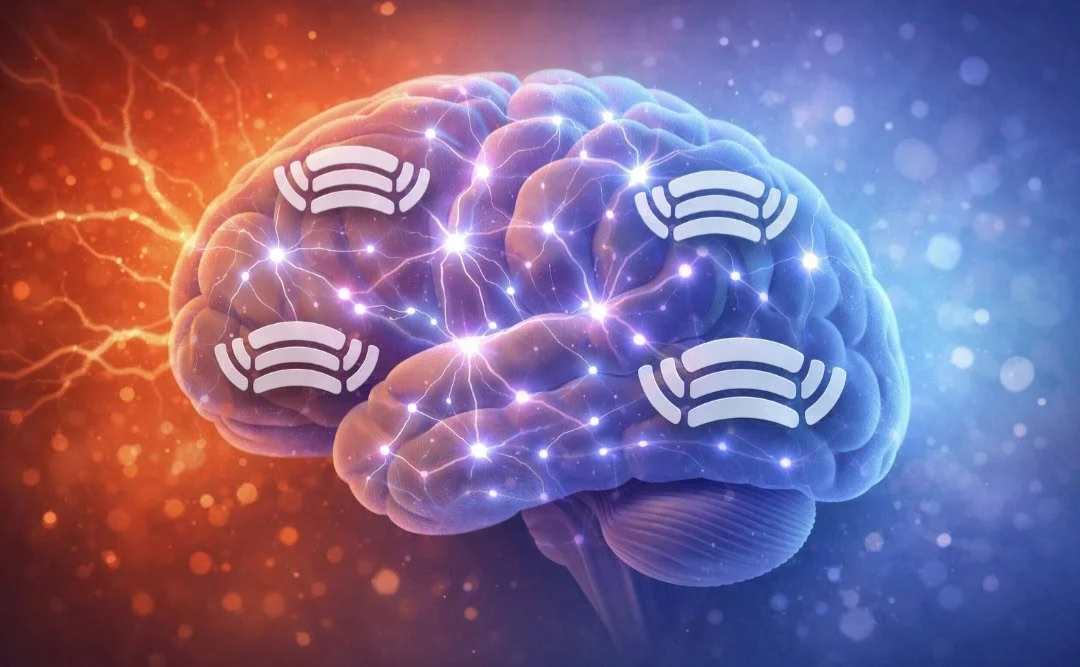
Here's the simple version: your brain has a natural "off switch" for stress and anxiety, and it's called GABA (gamma-aminobutyric acid).
GABA is your brain's primary inhibitory neurotransmitter, basically, it's the brakes for your brain. When GABA levels are healthy, it reduces the excitatory "go-go-go" signals firing between neurons. This helps your central nervous system relax, your thoughts slow down, and your body shift into a calmer, more restful state.
The problem? Modern life, chronic stress, poor sleep, too much caffeine, constant screen time, can mess with your GABA system. When GABA isn't doing its job effectively, anxiety creeps in. Your thoughts race. Sleep becomes elusive. You feel wired and tired at the same time.
Passionflower steps in as a GABA booster. Research suggests it works by increasing GABA activity in the brain, helping to restore that sense of calm and control. It doesn't knock you out or fog your brain, it just turns down the volume on the mental noise.
Passionflower for anxiety: The Benefits (and Why People Are Reaching for It)
Passionflower isn't a one-trick pony. Here's what it can help with:
Reduces racing thoughts – Especially helpful for people whose minds won't shut off at bedtime
Improves sleep quality – Supports deeper, more restful sleep without the grogginess of sleep aids
Lowers anxiety – Calms nervous tension without sedation or cognitive impairment
Supports stress response – Helps your body and brain handle daily stressors more gracefully
Minimal side effects – Unlike many pharmaceutical options, it's gentle on your system
Non-habit forming – You won't build a dependency or experience withdrawal
Whether you're dealing with occasional anxiety before a big event or chronic nighttime restlessness, passionflower offers a natural, research-backed option that works with your body's own calming mechanisms.
The Research: How Does It Stack Up Against Prescription Meds?
Okay, so it sounds great in theory: but does it actually work?
Here's where things get interesting. In a four-week double-blind clinical trial, researchers compared passionflower to oxazepam, a prescription benzodiazepine commonly used for anxiety. By the end of the study, both treatments were equally effective at reducing anxiety symptoms.
Let that sink in. A plant performed just as well as a prescription medication.
But here's the kicker: passionflower produced fewer side effects than oxazepam. While the prescription drug caused issues like daytime drowsiness and impaired job performance, passionflower users experienced none of those problems. No brain fog. No memory issues. No next-day hangover effect.
Another randomized controlled trial found similar results: passionflower was as effective as anti-anxiety medication at reducing anxiety, sleep disturbances, and stress reactivity. Researchers did note that larger studies are needed (as they always do), but the existing evidence is compelling.
And if you've ever dealt with pre-surgery anxiety, you'll appreciate this: passionflower was shown to significantly reduce anxiety in surgical patients when taken 30 to 90 minutes before a procedure. That's some serious calming power.
Is Passionflower Safe?
One of the best things about passionflower is its safety profile. The FDA regards it as safe, and clinical studies consistently report minimal side effects. Unlike some anti-anxiety medications that can impair memory or cognitive function, passionflower doesn't mess with your mental clarity.
That said, if you're currently taking anxiety medication: especially benzodiazepines or sedatives: it's important to talk to your healthcare provider before adding passionflower to the mix. It can work beautifully as a complementary support, but you don't want to create an overly sedative effect by stacking calming supplements without guidance.
Pregnant or breastfeeding? Skip passionflower for now, as there isn't enough research on its safety during those times.
How to Use Passionflower (Without Overdoing It)
Passionflower is incredibly versatile. Here's how most people use it:
Tea: A warm cup of passionflower tea about 30 to 60 minutes before bed can help ease you into sleep mode. It's gentle, soothing, and pairs well with other calming herbs like chamomile or lemon balm.
Tincture or Extract: Faster-acting than tea, tinctures are great if you need quick relief from acute anxiety or pre-event nerves. Follow the dosage on the label: usually around 30 to 60 drops.
Capsules: If you prefer convenience, capsules offer standardized doses (typically 250-500 mg). Take them in the evening for sleep support or during the day for general anxiety relief.
Most people notice effects within 30 to 90 minutes, and it's generally recommended to start with a lower dose to see how your body responds.
Who Should Consider Passionflower?
Passionflower is a great fit if you:
Struggle with racing thoughts, especially at night
Experience occasional or chronic anxiety
Want a natural alternative to prescription sleep aids or anti-anxiety meds
Feel "wired but tired" and can't seem to shut your brain off
Are looking for something that won't leave you foggy the next day
It's also worth exploring if you're someone who's sensitive to stronger sedatives or just prefers a gentler, plant-based approach to managing stress and sleep. If you've had success with other calming herbs like valerian or ashwagandha, passionflower is a natural next step: or a great addition to your routine.
Looking for more ways to support a calm mind? Check out our article on GABA: Your Brain's Natural Brake for Stress and Better Sleep to understand more about how this neurotransmitter works.
Final Thoughts: Give Your Mind Permission to Quiet Down
Here's the truth: you don't have to live with a brain that feels like it's constantly in overdrive. Racing thoughts, nighttime anxiety, and that "can't turn it off" feeling aren't things you just have to tolerate.
Passionflower offers a gentle, evidence-backed way to hit the mute button on mental chatter: without the side effects, dependency, or next-day grogginess that come with many pharmaceutical options. It's been trusted for centuries, and modern science is finally catching up to what traditional healers have known all along.
So if you're tired of staring at the ceiling at 2 AM, give passionflower a try. Your racing mind: and your future well-rested self: will thank you.
(PURCHASE)

Internal ad
Apply for a neo master card, including their secured Master car that utilizes secured limits(self funded) that helps you rebuild credit, as well as give you access to the benefits of a credit card. Creating a profile on their secured network is required to apply for their cards and many perks. Click here for more information.